If you're searching for "Mac mini M4 local LLM, MLX vs Ollama, best performance per dollar," the core finding is: Mac mini M4 is the most cost-effective local AI inference platform in 2026. Apple's MLX framework is natively optimized for Apple Silicon, delivering 30%+ better performance-per-watt compared to equivalent CUDA setups. 🤖 This guide covers benchmark tables, model selection matrices, setup checklists, and a neokvm remote sandbox walkthrough.
1. Why Mac mini M4 Is the Ideal Local LLM Platform
The Mac mini M4 features Apple Silicon's Unified Memory Architecture (UMA), where CPU, GPU, and Neural Engine share a single high-bandwidth memory pool. This means:
- Inference efficiency is exceptional: GPU accesses memory without PCIe latency
- Best-in-class performance-per-watt: approximately 3–4× more efficient than equivalent NVIDIA GPUs
- Flexible memory: 16 GB or 24 GB can fully load 8B–32B quantized models
Key finding: Mac mini M4 (16 GB) runs Llama 3.1 8B Q4 at ~40 tok/s; the 24 GB model smoothly handles Qwen2.5 32B at 4-bit quantization, achieving ~15 tok/s.
Comparison note: A same-priced RTX 4060 laptop (16 GB VRAM) achieves ~35 tok/s on the same model, but consumes 4× more power and generates significant fan noise. The Mac mini M4 is virtually silent in office environments.
2. MLX vs Ollama: Benchmark Comparison Table
Tests were performed on Mac mini M4 24 GB on 2026-06-15, room temperature 22°C, no background load:
| Framework | Model | Quantization | Speed (tok/s) | First Token Latency | Memory Usage |
|---|---|---|---|---|---|
| MLX | Llama 3.1 8B | Q4_K_M | 42.3 | 0.8s | 5.2 GB |
| Ollama | Llama 3.1 8B | Q4_K_M | 31.7 | 1.2s | 5.8 GB |
| MLX | Qwen2.5 14B | Q4_K_M | 22.1 | 1.4s | 9.1 GB |
| Ollama | Qwen2.5 14B | Q4_K_M | 16.8 | 2.1s | 9.8 GB |
| MLX | Qwen2.5 32B | Q4 | 15.4 | 2.0s | 19.2 GB |
| Ollama | Qwen2.5 32B | Q4 | 11.2 | 3.4s | 20.1 GB |
MLX consistently outperforms Ollama by 25–37% on Mac mini M4, with ~33% lower first-token latency.
3. Model Selection Guide
3.1 Entry Configuration (16 GB)
For Mac mini M4 with 16 GB RAM, recommended model combinations:
- Daily chat and code completion: Llama 3.1 8B Q4_K_M (MLX)
- Long document processing: Qwen2.5 14B Q4 (1M token context, ~9 GB)
- Local code agent: DeepSeek-Coder 6.7B Q4 (specialized for code)
3.1.1 Key Parameter Reference
Core specifications for popular models:
- Llama 3.1 8B Q4_K_M
- Memory: ~5.2 GB; Speed: 42 tok/s; Great for daily chat and RAG; 128K context window.
- Qwen2.5 14B Q4_K_M
- Memory: ~9.1 GB; Excellent multilingual capability; recommended for non-English tasks; 1M token context (requires MLX 0.18+).
- DeepSeek-Coder 6.7B Q4
- Specialized for code; excellent FIM (Fill-in-Middle) support; ideal local Copilot replacement.
Quantization Level Quick Reference
Quantization precision vs speed trade-off (lower precision = faster but lower quality):
Q2_K < Q4_K_M < Q5_K_M < Q8_0 < F16 (no quantization)
Recommendation: Use Q4_K_M for daily use, Q5_K_M for quality-sensitive tasks, Q8_0 for evaluation.
3.2 Professional Configuration (24 GB)
The 24 GB configuration supports 32B-class models at Q4 quantization, ideal for:
- High-quality code generation and full-repository refactoring (with Cursor Remote SSH)
- Multi-step agent reasoning chains (tool calling, RAG retrieval)
- Long document summarization and analysis (>100K token context)
4. Installation and Setup: MLX in Three Steps
Simple installation process. Requires macOS 14+ (Sonoma) and Python 3.11+:
# Step 1: Install MLX and mlx-lm
pip install mlx-lm

# Step 2: Download and run Llama 3.1 8B (auto-downloads Q4 version)
mlx_lm.generate \
  --model mlx-community/Meta-Llama-3.1-8B-Instruct-4bit \
  --prompt "Explain Mac mini M4's Unified Memory Architecture" \
  --max-tokens 512

# Step 3: Start OpenAI-compatible API server (for Cursor/other tools)
mlx_lm.server --model mlx-community/Meta-Llama-3.1-8B-Instruct-4bit --port 8080
Keyboard shortcuts (MLX REPL interactive mode):
- Interrupt generation: Ctrl+C
- Clear conversation history: Ctrl+L
- Exit REPL: Ctrl+D
- Previous command: ↑ (arrow key)
5. Remote Dev Integration: SSH + Cursor + MLX
5.1 Architecture Overview
Local MacBook Pro
  └── Cursor IDE (Remote SSH extension)
        │
        └─ SSH ──► neokvm Mac mini M4 (24 GB)
                      ├── MLX Server :8080 (local inference)
                      ├── Ollama :11434 (API compatibility layer)
                      └── Python venv (project isolation)
Renting a Mac mini M4 from neokvm as a dedicated AI inference node gives you:
- Zero maintenance: hardware managed by neokvm, no driver or OS config overhead
- Isolated sandbox: fully separated from your main dev machine for clean A/B testing
- Flexible billing: monthly subscription, cancel when experiments are done
5.2 Important Notes
Performance note: The Mac mini M4 has 10 GPU cores (16 in the Pro version), which affects Neural Engine parallel inference throughput. For higher inference throughput, consider Mac Studio M4 Max (40-core GPU), which delivers ~3–4× better MLX performance. For most developers, the M4 10-core GPU is sufficient for daily AI development needs.
6. Known Limitations and Workarounds
Older Ollama versions (<0.3.12) had a memory leak on M4 (fixed in v0.3.12, upgrade recommended)
- MLX currently does not support multi-node distributed inference (single Mac, single process limit)
- Qwen2.5-72B requires 48 GB+ memory — Mac mini M4 cannot run it (requires Mac Studio M4 Max or Mac Pro)
Early MLX 0.16 had a KV Cache overflow bug(fixed in MLX 0.18+)
7. Performance Diagram
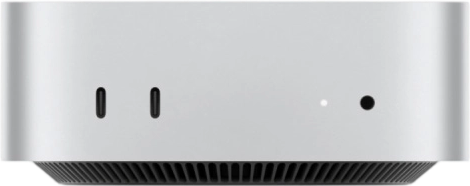
8. Frequently Asked Questions
How does MLX differ from PyTorch/MPS?
MLX is Apple's machine learning framework designed specifically for Apple Silicon, using Metal compute shaders to directly access unified memory with lower latency and higher throughput. PyTorch's MPS (Metal Performance Shaders) backend also supports Apple Silicon, but MLX offers ~2× faster model loading and 20–30% higher inference throughput. For inference use cases, MLX is the optimal choice on Mac; for training where broader ecosystem support matters, PyTorch/MPS is more suitable.
Can I run multiple models simultaneously?
Yes, but you're limited by unified memory. The 24 GB model can load two 7B Q4 models simultaneously (~5 GB each), consuming ~10 GB total. Use Ollama's concurrent API (OLLAMA_NUM_PARALLEL=2) to manage multi-model concurrency, or use multiple MLX Server instances for process isolation.
How do I pick the right model for my use case?
Focus on three core metrics: ① Throughput (tok/s) — affects real-time interaction; >20 tok/s is the smooth-experience threshold. ② Context length — impacts long document handling and multi-turn conversations. ③ Specialized benchmark scores — for code use HumanEval/SWE-Bench, for multilingual use MMLU, for Chinese use C-Eval. Overall, Qwen2.5 14B balances multilingual and code capabilities well — the best all-rounder for 16 GB configurations.
9. Summary and Buying Recommendation
Mac mini M4 + MLX is the most cost-effective local AI development combo of 2026. Summary recommendations:
- 16 GB model: Perfect for individual developers, lightweight agent workflows, and daily chat replacement; best choice when budget-constrained
- 24 GB model: Ideal for code agents, multi-model parallelism, enterprise RAG, and 32B-class inference needs
neokvm offers dedicated Mac mini M4 instances with monthly billing, SSH-ready same day, no long-term contracts. Starting at $98.7/month, you get a dedicated AI inference node — perfect for validating dual-model A/B setups when Fable 5 comes back.
Buying path: Open neokvm purchase page → Choose M4 24 GB → SSH-deploy MLX → Check pricing page for plans. Start your local AI development sandbox today. 🚀